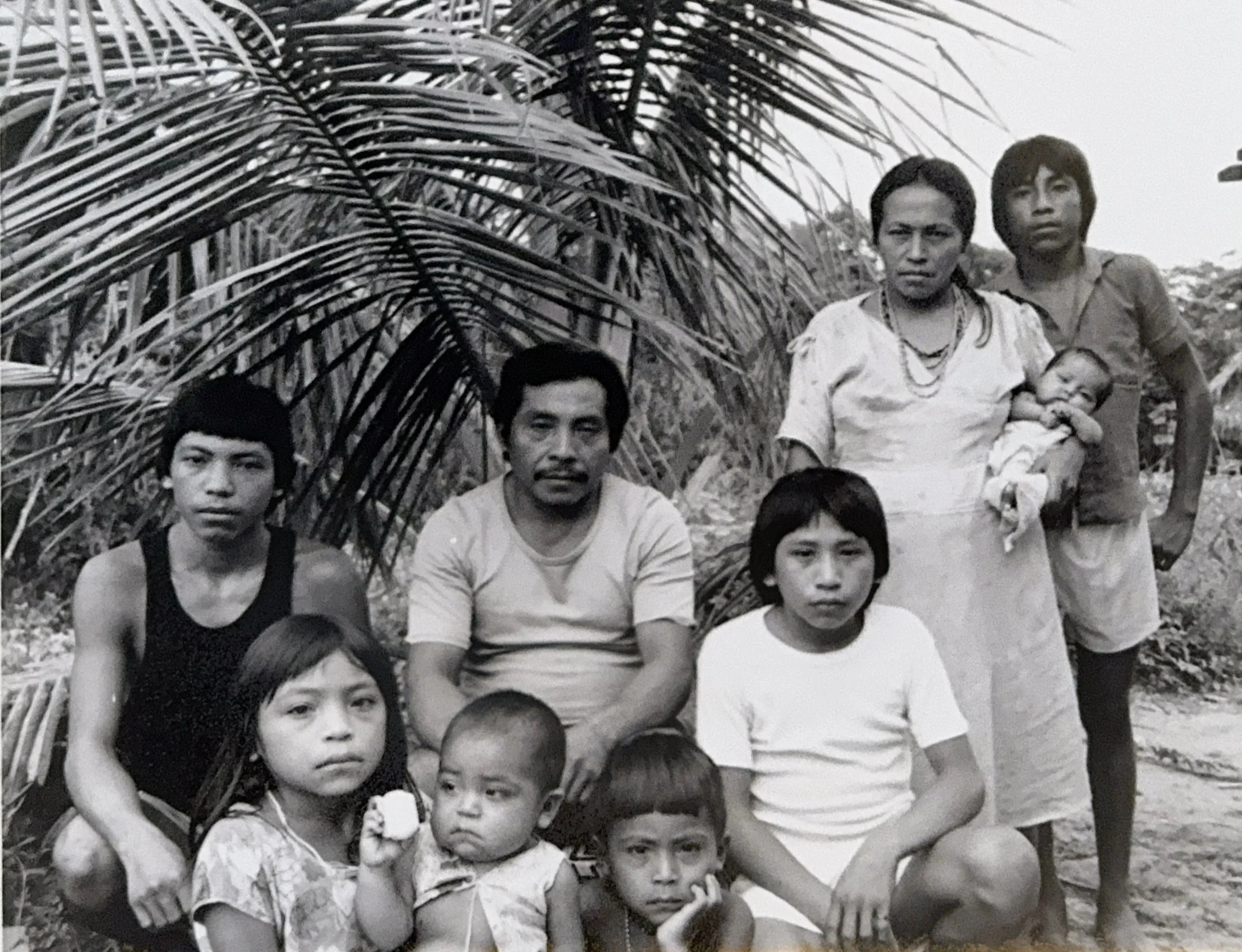
Tribes
Produced by The Cricket Theater
Written and performed by Jim Stowell
Directed by Bill Partlan
Set Design-Steve Krahnke
Sound Design-John Thayer
Lighting Design-Michael Klaers
Stage Manager-Matthew A. Everett
This play is my one-person opera. The biggest production of all my one-man plays.
“Jungle time is not clock-time. There is no way to measure it, or accelerate it or force it to behave. Trying to keep track of it with a watch is like trying to take the temperature with a ruler. Stowell throws himself into the story like a comet. From the moment he steps onto the boat with his Indian friends Stowell’s adventure teeters on the edge of danger while he weaves each climatic episode together with layers of rich poetic imagery. This is no mere retelling of an adventure. Stowell can create entire worlds on stage. ‘Tribes’ is an exhilarating journey to a land where time should stand still but won’t. Visit before it’s too late.” (Oct 10, 1992)
“Jim Stowell recounts the trip to the Amazon River basin that nearly turned tragic. For 2 1/2hours Stowell fills the stage at The Cricket Theatre with a roaring symphony of words and actions. This narrative is part adventure, part confession. Stowell stalks, kicks, shivers and smiles ruefully across the platform constructed to depict the village and suggest Stowell’s isolation. This is theater at its best, full of truth, power and commitment.” (Oct. 1992)
“If he were a scientist or a teacher Jim Stowell would travel around giving polite fact-filled lectures on his experiences among the Caxinaua people in the Brazilian rainforest. But, fortunately for us, Stowell is an actor, one who collects characters and scenes like a lepidopterist collects butterflies. Those expecting tales of noble savages will be sorely disappointed in ‘Tribes.’Stowell’s painful honest descriptions show the Caxinaua as struggling and complicated frontier people and himself as a bumbling Norte Americano in their midst.
Stowell has a marvelous ear for sound. His use of language is disarmingly simple but punctuated with astonishing images. One minute he perks along and the next his hands fly up and become the beating wings of a Morpheus butterfly.
Although it’s apparent where his sympathies lie, Stowell steers clear of overt political pronouncements, relying on clear detail and graceful juxtapositions of images to make his point. In effect, Stowell cast himself, and each of us, in the role of modern-day Columbus’s, retracing those famous footsteps not literally, but symbolically, and hoping to change the way the meeting will come out this time.” (Oct. 1992)
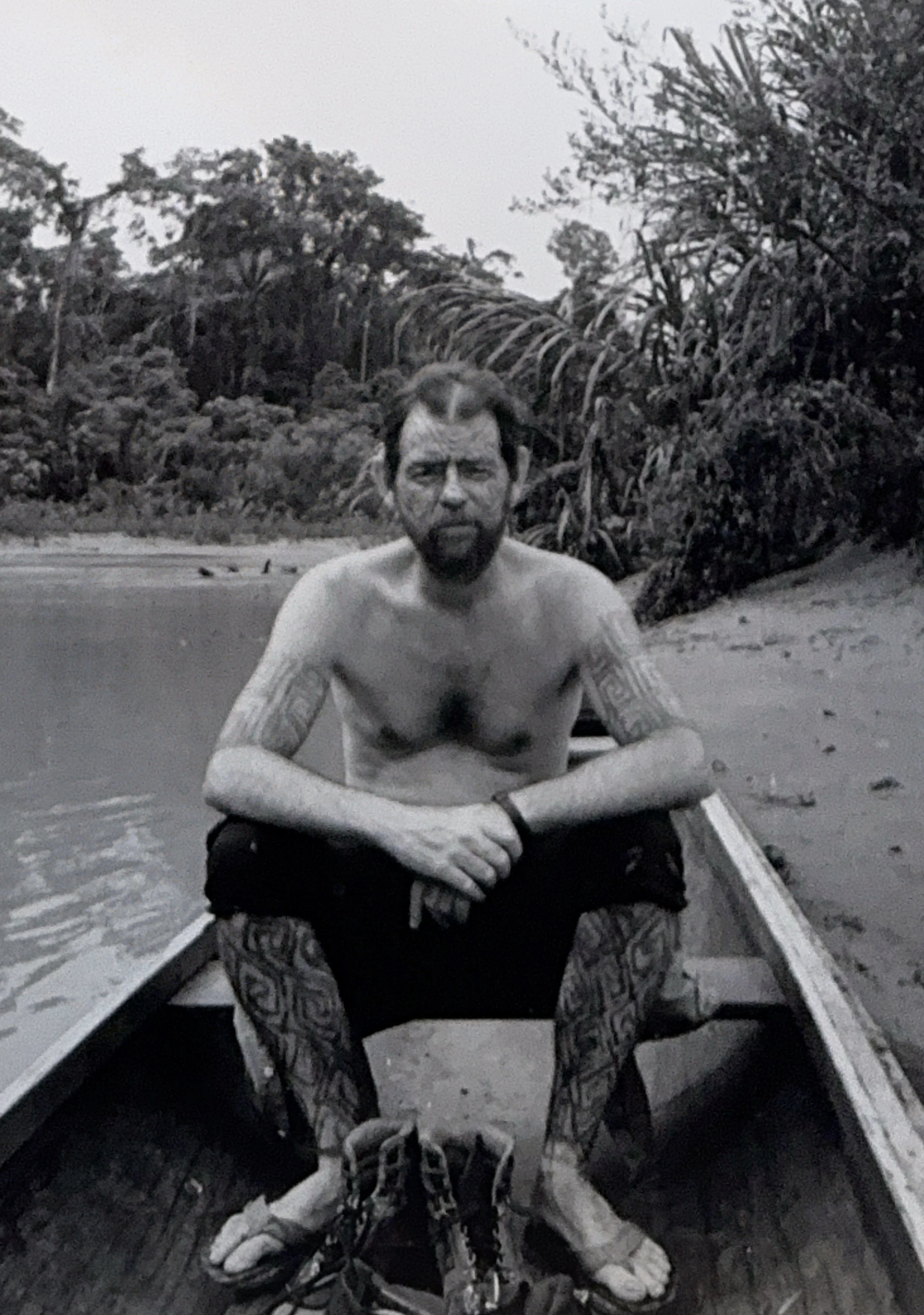
This play had major positive impact on the life of the Cricket Theater. The Cricket Theater was having money problems and was struggling to stay afloat. The show they had produced before mine was a huge flop. Bad reviews and almost nonexistent audiences. But it had been written by the mother of a movie star and the movie star was going to use this production to have the play ready to be produced with the movie stars money in NYC. The play was so bad it depressed everybody who worked at The Cricket. When rehearsals started there was a feeling of people struggling to stay afloat.
In 1989 I traveled to Brazil and wrote The Green Fuse produced by the Brass Tacks in 1990. On this trip to Brazil my wife Jessica and I had tried to contact native people without success. I went to Bill Partlan with the idea of my going back to the Amazon and this time I would contact native people there and try to live with a tribe. This time, I told Bill, I believe I can do it and I did. Jessica and I lived in a Native village in the Amazon rainforest for six weeks. After I returned from the trip I spent several months recuperating (pneumonia and malaria) and then started working on the play. I would meet Bill at The Cricket in their rehearsal space and I would talk, telling him the story of the trip. We usually spent around two hours doing this. Bill would ask questions. Make observations. We would talk back and forth. I would go home and spend time writing and then days later, maybe a week or more, depending on Bill’s schedule, we would meet and I would tell more of the story of the trip.
I want to tell this story about Bill Partlan. I ended up making a very good deal with the Cricket. During the run of the play, I remember the Cricket paying me something like $900-1,000 a week. It was in the middle of the run when I discovered I was the only person in the theater being paid. I don’t remember how big the staff was but at least 5-6 people. The ‘no pay’ included Bill. They were working for free to keep the theater going. Money was coming, a grant or something. I never knew the details. But for a while, it was hoped for only a while, everyone had to go without pay. By the time I found out this had been going on for several weeks. Steve Krahnke designed a brilliant set. I can’t really describe it but it was brilliant. Steve was on the staff and every week when he handed me my check I noticed he was saying something very Minnesotan, you know, passive-aggressive cheap shots. I said something about to Steve and that’s when he told me about the, ‘no pay.’
Steve and I talked with Bill the next day and Bill told Steve to stop with the cracks. Bill was very clear that the Cricket made a deal with a playwright and this theater was going to pay the playwright first. To Steve’s credit he apologized to me and we got along well after that. He was a real professional. Bill put the playwright first. Theaters make statements like that all the time. But Bill did it. When I think of the all the artist I have worked with over all these years, I always put Bill in the group who I believe have true theater courage. From our first meeting to the final night of the run of Tribes Bill and I worked on this play for almost two years.